Virginia's Public/Private Partnership Facilitates Economic Development
Lack of consistency -- in recruiting efforts, regulations, creation of infrastructure and policies of changing administrations -- has long been an acknowledged, if not publicly emphasized, problem in the economic development efforts of Virginia. With a constitutional provision prohibiting governors from serving two consecutive terms, many state agencies with directors and/or boards appointed by the governor found themselves holding their collective breath every four years to see what the focus of the next administration would be.
It shouldn't be a problem anymore.
During the past three years, the administration of Gov. George Allen has determinedly set about downsizing state government, restructuring agencies to remove unnecessary levels of bureaucracy, relinquishing the governmental privilege of appointing some agency heads, studying privatization, encouraging regional cooperation and supporting public/private ventures. The evolution of Virginia's Department of Economic Development into the Virginia Economic Development Partnership is an example of those actions.
Gov. Allen introduced and won passage for the creation of the partnership during the 1995 General Assembly session after presenting a report, "Opportunity Virginia: A Strategic Plan for Jobs & Prosperity," to leaders across the commonwealth. That report included the rationale for the partnership:
"Historically, Virginia's economic development efforts have been hampered by a lack of consistency over time. The state's long-term economic success will depend, in part, on its ability to promote consistency and greater commitment to economic development through a formal partnership of business leaders and the state."
The resulting organization now has a 15-member board of directors composed primarily of business leaders from the private sector. The governor also was successful in gaining increased funding for domestic and international marketing for the organization.
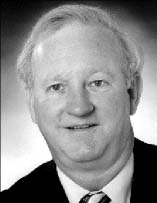 |
| Wayne Sterling heads the Virginia Economic Development Partnership: "We intend to be very aggressive and very responsive." |
|
Wayne Sterling, executive director of the partnership, came to Virginia in 1994 with an outstanding record in economic development circles. Previously he headed development in South Carolina, including negotiations with BMW for the giant facility there. "I ran that project for six years under (former) Gov. Carroll Campbell," he recalls.
It is his hope that the public will see no major changes in the operation of Virginia's economic development office. "I hope to have a seamless interface so that the public doesn't realize we have made a structural change," he said. "We fully intend to carry on (recruiting) activities in the same manner as before. Any changes should be invisible to our clients." |
As head of the partnership, Sterling now reports to its board of directors, not to the governor.
He noted that members of the board will serve terms longer than four years, which means they will remain on the board through more than one administration. "There will be a very few public appointments," he said, "which makes it as devoid of politics as you can get."
He touted changes in the organization's procurement process, including the removal of some bureaucracy, and said that personnel had been streamlined. Those changes, he said, "have given us more control and a speedier response capability, making us more accessible to the private sector. And we intend to be very aggressive and very responsive."
The partnership is prepared to provide site selection assistance, which includes a database listing of more than 500 industrial buildings and 800 industrial sites, incentive program information, financing assistance and customized information.
"We are a market-driven organization that will go after whatever market is growing and expanding," Sterling stressed. "We don't set our sights on just one type of development. We don't sit in an ivory tower -- you know, 'We talk only to the Cabots and the Lodges, and they talk only to God.' We'll talk to everybody."
Sterling said he is aware of no agenda to steer Virginia's economic development toward high-tech industry, despite what national media have hailed as the state's recent emergence as a center for high technology. In fact, he takes exception to the word "recent."
"It's interesting that Virginia is being perceived as an 'emerging' high-tech center," he said. "We have been a high-tech center for 40 years! The Internet was created in Virginia. There's a lot of depth of understanding and investment in high-tech that have been here for years."
Make no mistake, however: Sterling appreciates the publicity the state is getting; he just wants it to be accurate.
--Frances Helms
[ Cover Page ]
[ Virginia Is For High-Tech (And Always Has Been) ]
[ Virginia's Public/Private Partnership Facilitates Economic Development ]
[ High-Tech Tourism Brings Tourists, Dollars to Virginia ]
[ High-Tech: Without the Hype ]
[ Sponsors ]